To clean a mattress, remove all bedding, inspect the surface and care label, vacuum the top, sides, seams, and underside, spot-clean stains with the least moisture possible, deodorize with baking soda, dry fully, and vacuum again. Use minimal liquid on foam or memory foam mattresses to reduce the risk of moisture damage.
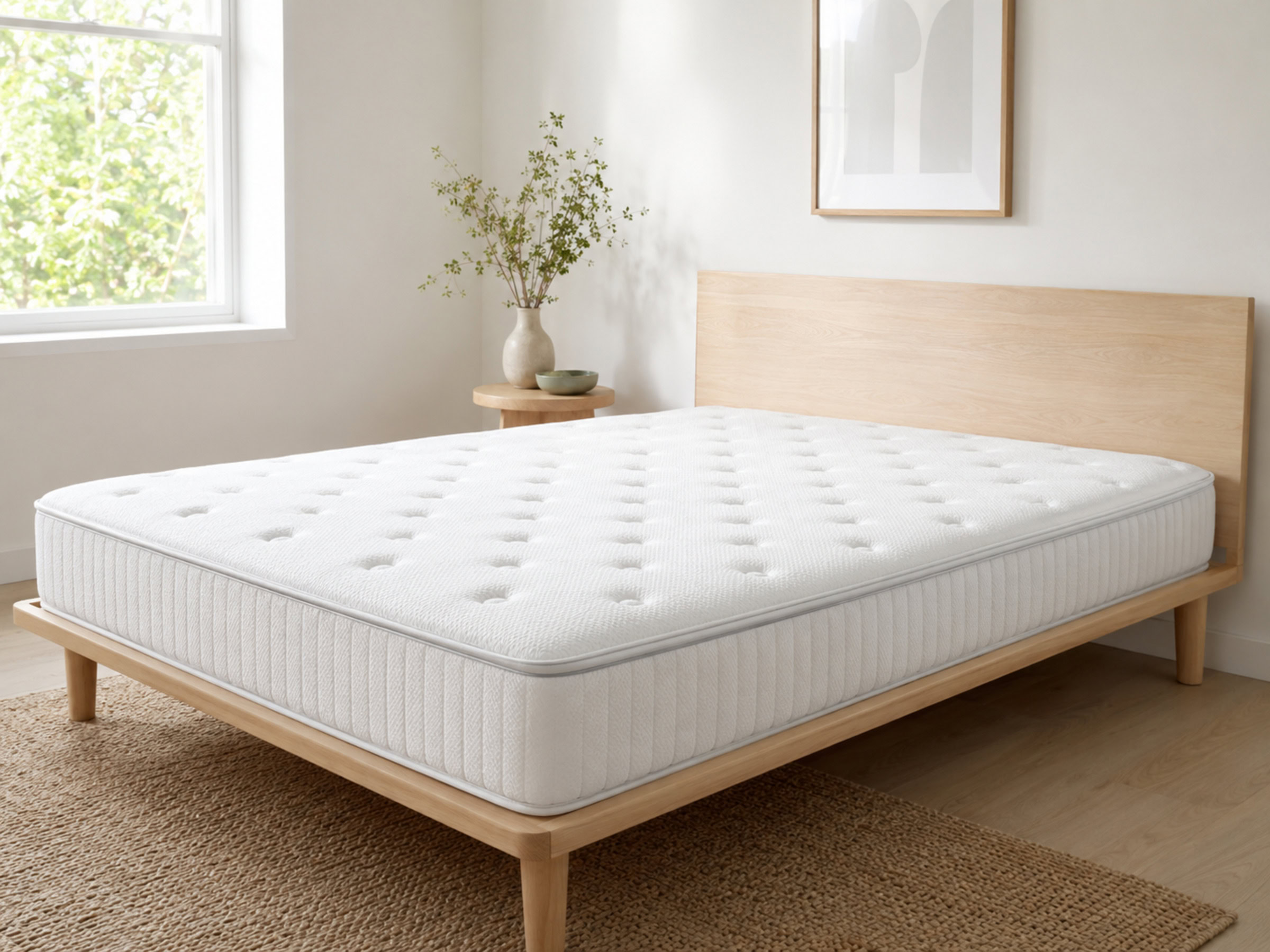
A clean, dry sleep surface in soft daylight sets the tone for the routine below.
A mattress can collect dust, sweat, body oils, dead skin, pet dander, spills, and odors over time. Cleaning it every few months helps keep your sleep surface fresher, but the safest method is usually a dry-first, low-moisture approach: vacuum thoroughly, treat only the areas that need it, deodorize, and dry the mattress fully before putting sheets back on.
Gather first
What You'll Need
Before you start, gather:
Vacuum cleaner with upholstery attachment
Clean white cloths
Mild dish soap or mild detergent
Baking soda
Enzyme cleaner for urine, pet stains, or other biological stains
Fan or open window for airflow, plus a mattress protector for prevention
Always check the mattress care label before applying moisture, peroxide, steam, or a commercial cleaner. Test any cleaner on a small hidden area first, especially if the mattress cover is colored, delicate, or textured. Hydrogen peroxide and stronger stain treatments can lighten fabric, so use them sparingly and only where needed.
The routine
How to Clean a Mattress Step by Step
1
Remove and wash all bedding
Strip the bed completely. Remove sheets, pillowcases, blankets, mattress pads, and mattress protectors. Wash washable bedding according to the care label.
This step matters because sheets and protectors collect sweat, body oils, skin cells, allergens, and spills before they reach the mattress. Washing bedding regularly keeps that buildup from transferring back onto a freshly cleaned sleep surface.
2
Look at the mattress before you decide what to do
Check the surface in daylight before reaching for a cleaner. Note where the stains are, what colour they are, whether any area smells when you put your face close to it, and whether the fabric feels damp or cool anywhere. A mattress with two old coffee marks needs a different job from one with a fresh pet accident, and the routine below scales down as easily as it scales up. Check the care label at the same time — it decides whether moisture, peroxide, or steam are options at all.
3
Vacuum the mattress surface and seams
Use a clean upholstery attachment across the entire surface, working slowly over the top, sides, seams, handles, edges, and any tufted or quilted areas, then switch to the crevice tool for seams, piping, and stitched channels where dust and grit settle. Vacuuming first matters because it removes dry debris before any cleaner is introduced — anything left on the surface turns to residue the moment it gets damp.
4
Spot-clean stains
Do not spray cleaner across the entire mattress unless the care label specifically allows it. Treat visible stains one at a time, keeping the cleaner on a clean cloth rather than pouring it onto the mattress.
Apply a small amount of cleaner to a clean cloth.
Gently blot the stain.
Use another cloth lightly dampened with cold water to blot away residue.
Repeat if needed.
Press with a dry cloth to absorb moisture.
Let the area dry completely.
5
Sprinkle baking soda over the mattress
Once stain-treated areas are no longer wet, sprinkle a thin, even layer of baking soda over the mattress. Baking soda helps absorb moisture and neutralize odor. For light freshening, leave it for at least 15–30 minutes. For stronger odors, leave it for several hours or longer if you have time. If odor comes from urine, vomit, pet accidents, or mildew, treat the source first — baking soda does not replace that treatment.
Because the mattress has to stay uncovered while the baking soda works, start this in the morning rather than the evening. That gives the powder a full working day and leaves the bed usable by night. The evening before a night away works just as well.
6
Let the mattress dry completely
Open windows, turn on a fan, and give the mattress as much airflow as possible. Do not put sheets, blankets, or a mattress protector back on until the mattress is fully dry.
This is one of the most important steps. Too much moisture can lead to odor, mildew, mold, or damage to comfort materials. A lightly spot-cleaned area may dry in a few hours, while a deeper clean can need most of the day depending on material, room temperature, humidity, and ventilation. Never mix cleaning products, especially bleach with ammonia-based cleaners.[5]
7
Vacuum again
After the baking soda has sat long enough and the mattress is dry, vacuum again with the upholstery attachment. Move slowly to remove powder from the surface, especially around seams and quilted areas.
8
Add a clean mattress protector
Once the mattress is clean and dry, add a washable mattress protector before making the bed. A protector helps prevent sweat, body oils, spills, urine, and pet accidents from reaching the mattress.
A standard protector covers the top and sides. A full encasement zips around all six faces of the mattress, which is what you want if bed bugs or a recurring odour from below are the concern, or if the mattress has already been treated once.
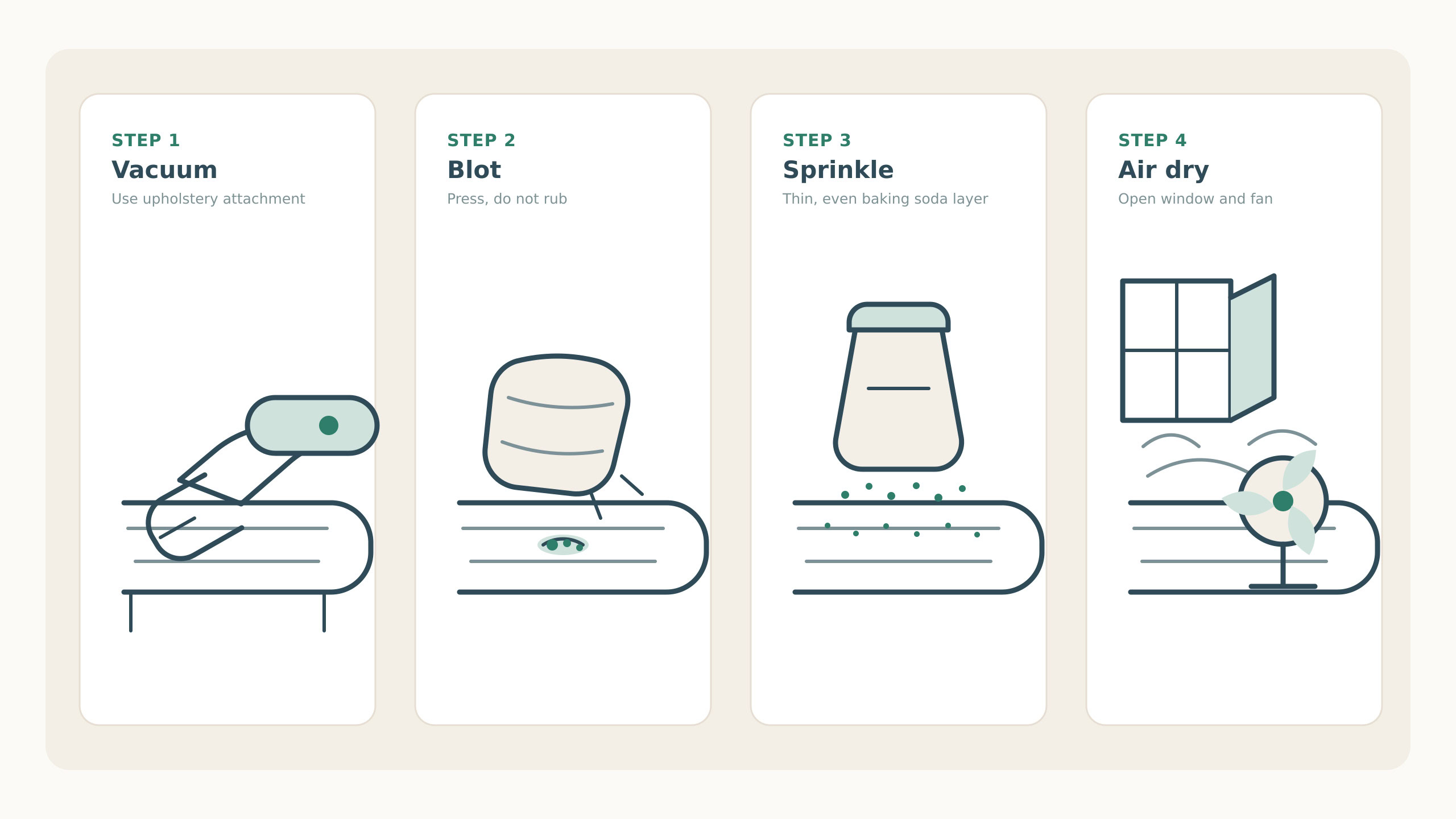
The dry-first sequence at a glance: vacuum, spot-treat, deodorize, then dry.
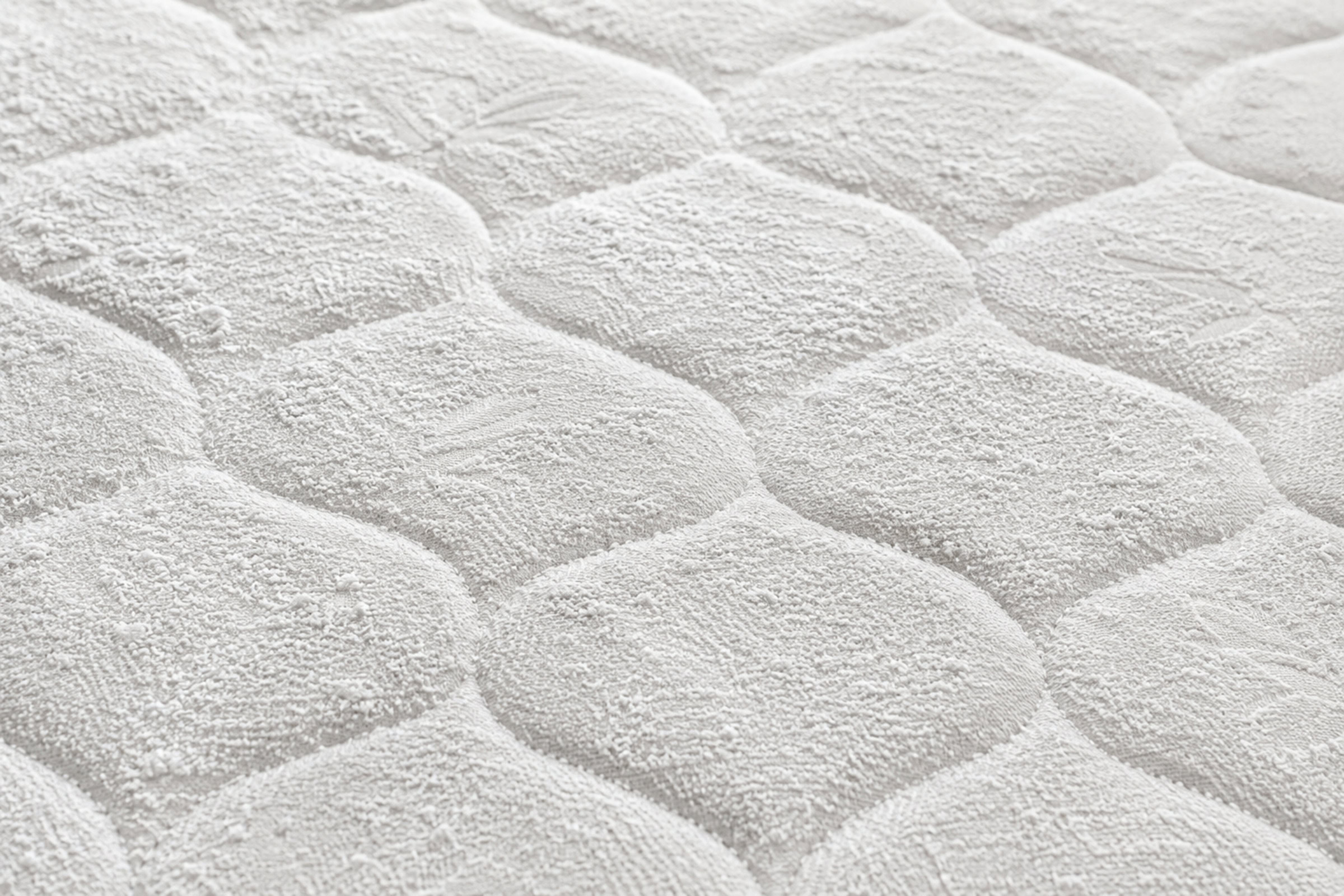
A thin, even layer is enough. More powder just takes longer to vacuum up.
Match cleaner to stain
How to Remove Stains from a Mattress
Different stains need different cleaners. The safest rule is to blot, not scrub, and to use the smallest amount of liquid that can do the job.
Recommended cleaner, method, and caution for common mattress stains.
Stain type
Best cleaner
Method
Caution
Urine
Enzyme cleaner or diluted white vinegar
Blot liquid, lightly mist cleaner, blot again, dry, add baking soda
Do not soak the mattress
Blood
Cold water, mild detergent, or hydrogen peroxide
Blot with cold solution until stain lifts
Cold water only — heat sets protein stains
Sweat or yellow stains
Mild detergent or diluted hydrogen peroxide
Spot-clean, blot, and dry fully
Spot-test peroxide on a hidden area first
Vomit
Remove solids, use diluted vinegar or enzyme cleaner
Blot, deodorize with baking soda, dry
Ventilate well
Pet stains
Enzyme cleaner
Follow product directions, blot, and dry
Repeat if odor remains
Oil or lotion
Dish soap solution
Dab lightly, then blot dry
Avoid over-wetting
For biological stains such as blood, sweat, urine, vomit, and pet accidents, an enzyme cleaner is often the most practical choice because it targets odor-causing organic residue. Hydrogen peroxide can help with some tough discoloration, but it may lighten fabric, so test first and use it only in small amounts.
How to Get Urine Out of a Mattress
For fresh urine, blot up as much liquid as possible with towels. Press firmly, but do not rub. Then use an enzyme cleaner or a lightly sprayed vinegar solution, blot again, and cover the area with baking soda once the surface is no longer wet. Let it dry fully, then vacuum.
For dried urine stains, an enzyme cleaner is usually more effective because urine odor can remain deeper in the mattress. Apply according to the product instructions, avoid soaking the mattress, and repeat after drying if odor remains. With pet accidents, removing the odor fully is important because lingering scent can attract pets back to the same spot.
Do not skip this
How to Dry a Mattress After Cleaning
Drying is not optional. A mattress that feels slightly damp can trap moisture under sheets and create musty odor.
To dry a mattress faster:
Blot wet areas with dry towels.
Open windows if weather allows.
Use a fan to move air across the surface.
Use a dehumidifier in humid rooms.
Stand the mattress on its side if the manufacturer allows it.
Wait until there are no cold, damp, or musty areas before making the bed.
Good ventilation, open windows, a fan, and a dehumidifier can help the mattress dry more evenly. Aim to dry damp areas as quickly as possible; the longer moisture sits inside fabric or foam, the higher the risk of musty odor, mildew, or mold.
Know the limits
When Cleaning Is Not Enough
Sometimes a mattress is too damaged or contaminated to clean safely at home. Professional mattress cleaning uses chemical formulations, high-temperature water, and often steam, so it is not a step to reach for casually. Consider professional cleaning or replacement if:
The mattress has visible mold.
A musty smell returns after drying.
Urine or pet odor remains after repeated enzyme-cleaner treatment.
The mattress stays damp for too long.
The cover or foam is damaged.
The mattress sags, feels uncomfortable, or is near the end of its lifespan.
Allergy symptoms worsen in bed despite cleaning and washing bedding.
If a mattress has mold or persistent moisture problems, cleaning the surface may not solve the underlying issue. Visible mold, recurring musty odor, or dampness inside the mattress should be treated as a serious sign that the mattress may need professional assessment or replacement.[3]
Heat & moisture
Can You Steam Clean a Mattress?
You can steam clean some mattresses, but only if the care label allows it and you can dry the mattress completely. Steam adds heat and moisture, which can be risky for foam, memory foam, old mattresses, or rooms with poor ventilation.
Avoid steam cleaning when:
The mattress is memory foam or foam and the care label does not allow moisture.
The room is humid or poorly ventilated.
You cannot leave the mattress uncovered until fully dry.
The mattress already smells musty.
There is visible mold.
Use steam or upholstery-cleaning machines only when the mattress is allowed to get slightly damp and you can dry it fully afterward. When in doubt, choose spot-cleaning and airflow instead of adding heat and moisture.
Extra caution
How to Clean a Memory Foam Mattress Safely
Memory foam needs extra caution because it is not designed to get wet. Use the same cleaning sequence: vacuum, spot-clean, deodorize, dry, but use less liquid and avoid soaking the foam.
For memory foam:
Vacuum first.
Use only a lightly damp cloth for stains.
Blot instead of scrubbing.
Avoid steam unless the care label clearly allows it.
Dry with airflow, not high heat.
Do not put bedding back on until fully dry.
Memory foam absorbs moisture easily and can be slow to dry, so a low-moisture approach is the safest choice. Keep cleaning solution near the surface, blot gently, and give the foam plenty of airflow before using the bed again.
Common mistakes
What Not to Do When Cleaning a Mattress
Avoid these common mattress-cleaning mistakes:
Do not soak the mattress.
Do not scrub stains aggressively.
Do not pour cleaner directly onto the bed.
Do not use bleach unless the care label specifically allows it.
Do not mix cleaning chemicals.
Do not put sheets on a damp mattress.
Do not use steam on memory foam unless approved by the manufacturer.
Do not leave baking soda residue behind.
Do not ignore mold or a persistent musty smell.
Avoid bleach unless the care label clearly allows it, because it can damage mattress fabric and leave harsh residue. Never mix cleaning chemicals, especially bleach with ammonia-based products, because the fumes can be dangerous.
Frequency
How Often Should You Clean a Mattress?
Clean your mattress about every 3–6 months, and spot-clean spills or stains immediately. If you have allergies, pets, night sweats, children, or frequent spills, clean and vacuum it more often.
For most homes, a full refresh every three to six months is a practical schedule. If the mattress has a protector and stays clean, the longer end of that range is usually enough; if there are spills, pets, allergies, or night sweats, clean sooner and spot-treat stains right away.
Prevention
How to Keep Your Mattress Clean Longer
The best way to clean a mattress is to prevent dirt and liquid from reaching it in the first place.
Use these habits:
Use a washable waterproof mattress protector.
Wash sheets regularly.
Vacuum the mattress every few months.
Treat stains as soon as they happen.
Avoid eating and drinking in bed.
Keep pets on a washable blanket if they sleep on the bed.
Air out the mattress before making the bed when possible.
Rotate the mattress if the manufacturer recommends it.
A waterproof protector, regular sheet washing, and fewer food or drink spills in bed will reduce stains and allergen buildup. Washable covers and occasional rotation, when the manufacturer allows it, also help keep the mattress cleaner and more evenly worn.
Quick answers
FAQ
Can I put the sheets back if the mattress feels only slightly damp?
No. Slightly damp is the condition that causes musty odour and mildew, because the sheets trap what is left. Wait until no area feels cool to the back of your hand.
Do I need a special cleaner, or will dish soap do?
Dish soap handles oil and general grime. Biological stains — urine, blood, sweat, vomit, pet accidents — need an enzyme cleaner, because the problem is organic residue rather than colour. Whatever you use, keep in mind that detergent is difficult to rinse out of a mattress, so choose something mild and lightly scented and use as little as possible.
References
Sources and further reading
How Do I Clean a Spill on My Mattress? — Tempur-Pedic, current manufacturer care guidance. Explains why the mattress material should not be saturated and must be allowed to air dry completely.
How to Clean Memory Foam — eze Mattress, updated June 18, 2026. Manufacturer guidance explaining that memory foam absorbs liquids quickly, dries slowly, and requires low-moisture cleaning.
A Brief Guide to Mold, Moisture and Your Home — U.S. Environmental Protection Agency, updated February 18, 2026. Explains the connection between persistent moisture, mold growth, potential health effects, and damage to porous materials.
Indoor Allergens — American Academy of Allergy, Asthma & Immunology. Describes dust mite allergens as common allergy and asthma triggers and identifies bedding as an environment where dust mites thrive.
How to Safely Clean and Sanitize with Bleach — Centers for Disease Control and Prevention, February 9, 2024. Provides the chemical safety warning not to mix bleach with ammonia or other cleaners.
Current information last reviewed: August 5, 2026
More bedroom care
Helpful sleep and bedding resources
Once the mattress is clean and fully dry, the next layer of comfort comes from the bedding, topper, pillows, and sleep setup around it. These editorial resources can help you keep the rest of the bedroom feeling fresh, comfortable, and easier to maintain.